New York · 7 min read
New York for first-timers: subway, neighbourhoods and planning
How to organise New York by area, use the subway with confidence and avoid wasting time crossing Manhattan.
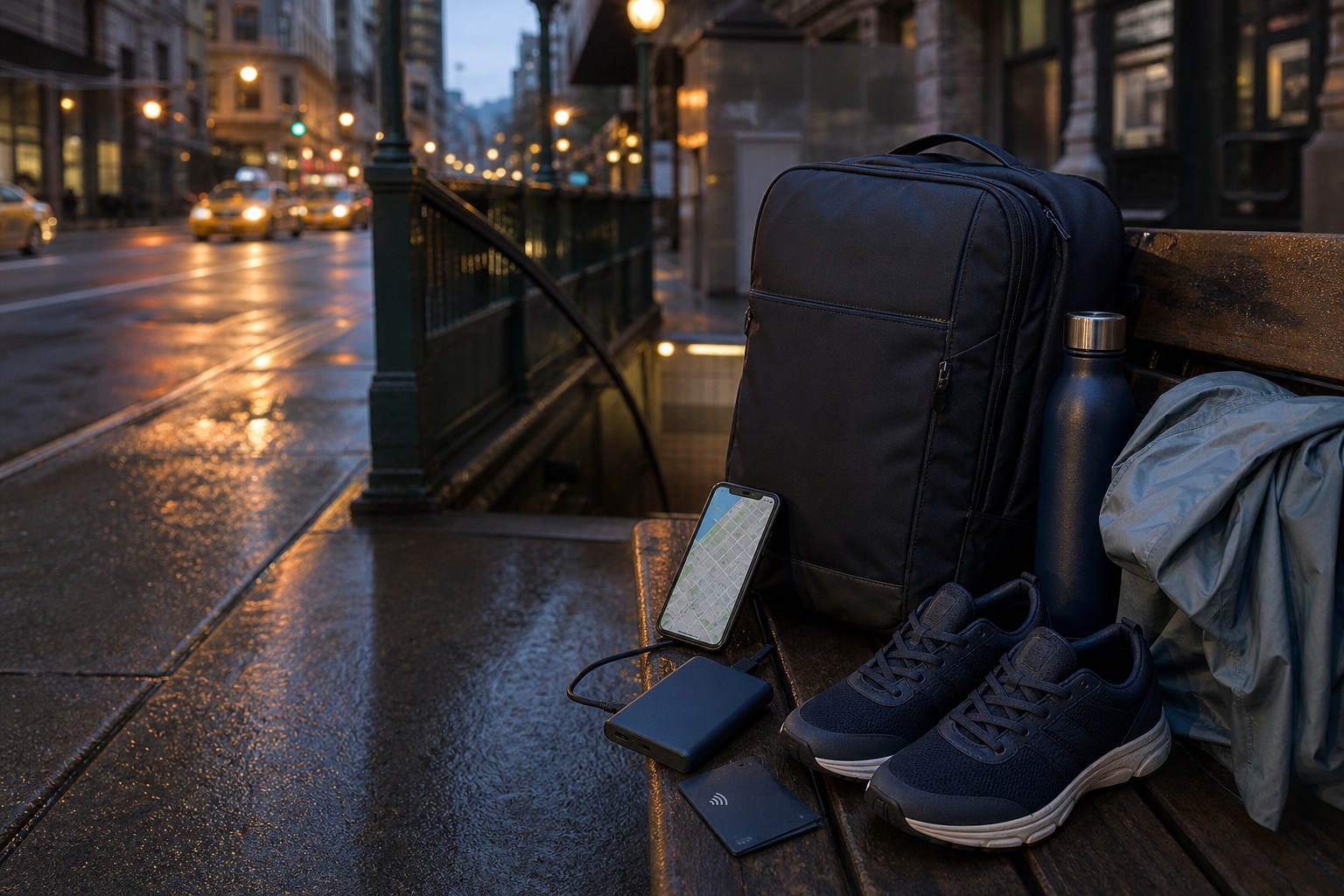
Editorial image: Trekky. Imagen editorial original de Trekky.
Quick answer
For a first visit, choose a legal base near a useful line and organise New York into Manhattan and Brooklyn sections without crossing the city repeatedly each day. Use MTA guidance for OMNY and keep the same payment method according to its rules. Check accommodation with NYC OSE, and limit each day to one main area and three priorities.
One area per half-day
New York makes sense area by area: book a base only after checking legality and the actual airport journey. Keep arrival day in the neighbourhood and protect departure margin for lifts, luggage, the station and possible service changes. New York becomes manageable when every morning and afternoon has clear geography. Do not try to complete a neighbourhood checklist; choose chapters connected on foot or by one simple journey.
Geographic chapters, not a checklist
Day 1 · Arrival and base
Transfer, check the neighbourhood and eat nearby. Avoid a timed observation deck or show.
Day 2 · Midtown or Downtown
Choose one half of Manhattan, one observation deck or museum, and a walk. Three priorities maximum.
Day 3 · The other half
Cover the area not chosen, add a break and finish near a direct connection.
Day 4 · Conditional Brooklyn
Choose one neighbourhood and waterfront, with a turnaround point before the final activity.
Subway, accommodation and longer jumps
OMNY or bank card
Check current MTA guidance and use the payment method consistently. Do not assume how it applies to more than one person.
Accommodation
Read NYC OSE information before paying. A commercial description alone does not prove that a stay follows the rules.
Walk or subway
Walk within the area and use the subway for longer jumps. A taxi depends on group, luggage and traffic.
Real example · Lexington corridor, 4, 5 and 6
How to read the New York subway: local, express and direction
The 4, 5 and 6 share green because they use the same corridor. The number identifies the service: the 6 makes local stops while the 4 and 5 stop at major points on this section.

View text explanation
- For southbound travel, first look for Downtown & Brooklyn signs. For northbound travel, look for Uptown & The Bronx.
- Between Grand Central-42 St and Brooklyn Bridge-City Hall, the local 6 also stops at 33 St, 28 St, 23 St, Astor Pl, Bleecker St, Spring St and Canal St.
- In this example, the express 4 and 5 stop at Grand Central-42 St, 14 St-Union Sq and Brooklyn Bridge-City Hall.
- Before passing the gates, confirm the service number, direction and current changes with MTA.
Trekky editorial diagram, version 1. Reviewed on 2026-07-27 by Trekky Editorial.
Add the city day bag to Trekky
Import 12 essentials for walking, using the subway and keeping bookings available.
Sources and review
Written and reviewed by Manuel. Founder of Trekky and traveller across 36 countries. Last reviewed: 1 September 2026.
Each guide separates official facts from editorial recommendations, links its sources and displays its latest review date.
Keep planning your trip

Japan · 10 min
Using trains in Japan: IC cards, tickets and luggage
A practical guide to IC cards, Shinkansen tickets, seat reservations, station changes and luggage rules in Japan.
Reviewed
Disneyland Paris · 8 min
Disneyland Paris in one day: app, two priorities and a useful day bag
Prepare the app, entry and a light day bag; order the day by time bands and recover when rain, queues or tiredness intervene.
Reviewed